Spend five minutes on TikTok or Instagram and you’ll spot it: that warm, slightly dreamy photo quality that makes everything look like it was shot on an old Sony or Canon point-and-shoot. Skin tones glow. Highlights roll off softly. Colors feel organic, not engineered.
That’s the CCD camera look — and it’s become one of the most sought-after aesthetics in photography right now.
The problem? CCD cameras are vintage hardware. The sensors that produce this signature look were largely replaced by CMOS technology after 2010. Today, getting your hands on a working CCD camera means trawling eBay, paying $100–$300 for aging hardware, and hoping the thing actually works when it arrives.
There’s a better way — and it takes about 10 seconds.
What Is the CCD Camera Look, Exactly?
Before we get to the shortcut, it’s worth understanding what makes the CCD aesthetic distinct.
CCD stands for Charge-Coupled Device — a type of image sensor used in digital cameras throughout the 1990s and 2000s. Unlike modern CMOS sensors, CCD sensors processed light and color differently, which produced results that photographers today describe as “magical” or “filmic.”
The Visual Fingerprints of a CCD Camera
Warm, organic color rendering. CCD sensors reproduced color in a way that felt natural rather than mathematically accurate. Skin tones have a soft warmth. Blues are deep but not harsh. Greens feel lush, not oversaturated.
Gentle highlight rolloff. Bright areas in a CCD photo don’t blow out aggressively — they roll off gradually, creating a gentle glow. This is one of the most distinctive qualities of the look.
Subtle luminance noise. CCD noise is softer and more even than harsh digital noise — closer in feel to very fine film grain. It adds texture without looking like a mistake.
Lower dynamic range, but beautiful. CCD sensors captured less dynamic range than modern sensors, which means shadows fall darker and highlights clip softer. The result is more dramatic and contrasty — in the best possible way.
Natural depth and “pop.” CCD photos have a quality that’s hard to name but easy to feel: subjects pop from backgrounds with a naturalness that modern computational photography often overcorrects.
This is why the CCD camera look is distinct from the Y2K camera aesthetic — which is flashier, cooler-toned, and grittier. CCD is warm and filmic; Y2K is harsh and electric. For a deeper dive into the differences, check out our guide on Y2K Camera vs CCD Camera.

Late night McDonalds run — warm tones, soft grain, that cozy 4am energy
Why CCD Cameras Are So Expensive (and Unreliable)
The CCD camera resale market has exploded. Cameras that were $20 at a garage sale in 2018 now sell for $150–$400. Here’s why:
- Supply is fixed. Nobody makes new CCD cameras. Every unit is aging hardware.
- Demand is rising. Photographers and Gen Z content creators have discovered the look. Prices keep climbing.
- Hardware is unreliable. Old sensors fail. LCD screens crack. Battery compartments corrode.
Popular models driving the trend: Sony Cyber-shot DSC-T series, Canon Digital IXUS / PowerShot A series, Casio Exilim EX-Z series, Samsung NV series, Nikon Coolpix S series.
Even if you find one at a good price, you’re stuck with proprietary cables, ancient memory cards (xD or Memory Stick), and constant anxiety about breakage.

Spontaneous parking garage moment — the CCD captures that candid joy perfectly
Three Ways to Get the CCD Look (Ranked)
Option 1: Buy a Vintage CCD Camera
Pros: 100% authentic sensor behavior, collector value, the tactile joy of shooting on old hardware.
Cons: $150–$400 on eBay. Risk of broken hardware. Outdated storage formats. Fixed 4–8MP resolution. No flexibility to re-edit.
Verdict: Worth it if you’re a collector or photography purist. For everyone else — too expensive, too fragile, too limited.
Option 2: Lightroom Presets
Pros: Works on any photo, high-resolution output, lots of preset options.
Cons: Getting the look right requires technical knowledge. Even great presets rarely nail the organic quality of real CCD color science. And quality preset packs cost $20–$80 each.
Verdict: A reasonable middle ground for Lightroom users who want control. But there’s a ceiling on how close you can get to authentic CCD color with manual presets.
Option 3: AI-Powered CCD Effect (Best)
AI tools trained on real CCD camera output reproduce the color science, highlight rolloff, and noise characteristics with a level of authenticity that manual presets can’t match. The AI doesn’t approximate the look via sliders — it learns the underlying visual patterns from real CCD-shot images, then applies them to your photo.
Pros: Instant results, full original resolution, no technical knowledge needed, fully customizable.
Try it: PopCam’s CCD camera effect tool

Golden hour by the pool — that dreamy soft focus hits different on a CCD
Step-by-Step: Get the CCD Look in Under a Minute
Step 1: Pick Your Photo
Almost any photo works, but the CCD look shines on portraits and candid shots, street photography, travel photos, and indoor shots under natural light.
Pro tip: Photos taken in slightly challenging lighting — golden hour, overcast sky, indoor window light — benefit most. The gentle highlight rolloff handles these conditions beautifully.
Step 2: Upload to PopCam
Go to PopCam’s CCD camera effect tool. Drag and drop your photo, or tap to browse your camera roll.
Step 3: Choose Your CCD Preset
PopCam offers CCD presets tuned to distinct visual moods:
- Warm Daylight CCD — the signature warmth of early-2000s point-and-shoots; soft skin tones, gentle highlights
- Cool Classic Grain — slightly cooler and more contrasty, the look of early-2000s family snapshots
- Street Neon Grain — higher contrast, more dramatic shadows, built for street and night photography
- Film Bloom Warm — blends CCD color science with subtle film grain and a soft halation glow
Step 4: Adjust (Optional)
Fine-tune with controls for warmth, highlight rolloff, grain intensity, shadow depth, and color saturation.
Step 5: Download
Export at full original resolution. No watermarks, no compression.
Late-night supermarket adventures — those warm tones make everything feel nostalgic
CCD Look vs. Other Retro Aesthetics
It’s easy to confuse the CCD aesthetic with similar vintage looks. Here’s how they differ:
CCD Camera: Warm, organic color tone | Soft or no flash | Fine, luminous grain | Filmic, intimate vibe
Y2K Digital: Cool, blue-green tone | Harsh, blown out flash | Digital noise | Electric, gritty vibe — perfect for recreating that early 2000s party aesthetic. See our Y2K camera settings guide for the full breakdown.
Film (35mm): Variable by stock | Optical flare | Heavy film grain | Analog, timeless vibe
Disposable Camera: Warm-cool mix | Flat, harsh flash | Heavy grain | Casual, lo-fi vibe
The CCD look occupies a sweet spot: more modern than film, warmer and softer than Y2K. It’s early digital photography at its most appealing — before everything got too sharp, too clean, too processed.

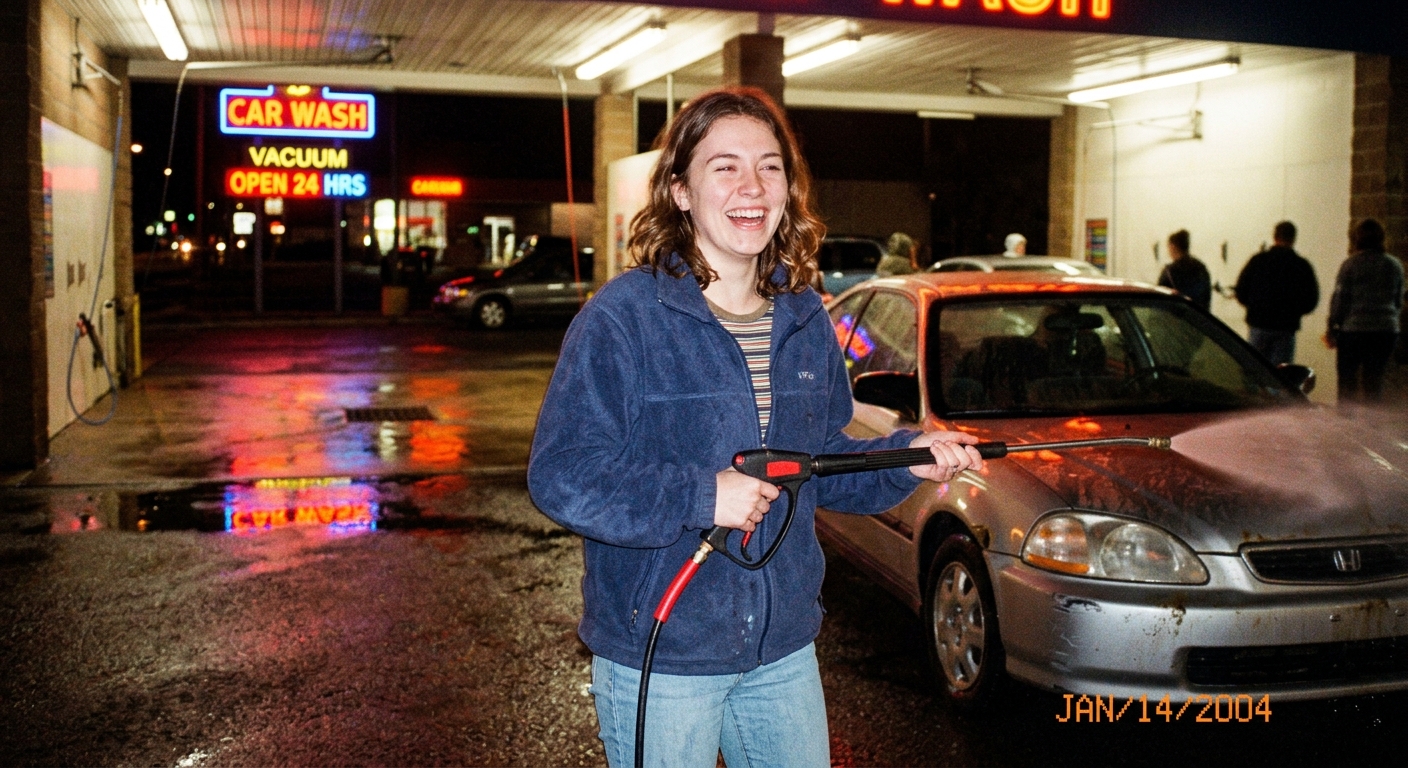
Midnight car wash — wet pavement, neon glow, and that carefree energy
Who’s Using the CCD Look Right Now
Content creators use it to give Instagram feeds a cohesive, nostalgic warmth that stands out against hyper-sharp smartphone content.
Fashion brands shoot lookbooks with a CCD filter to signal authenticity — the opposite of the over-retouched catalog look.
Musicians apply the CCD aesthetic to press photos and album artwork to evoke early-2000s indie energy.
Everyday users transform iPhone photos of friends, food, and travel into something that feels like a found photograph — real, warm, lived-in.
Frequently Asked Questions
Is AI CCD as convincing as real hardware?
For 95% of use cases, yes. The difference a purist might notice — the exact way a specific camera’s sensor handles chromatic aberration at the edges — isn’t visible on a social media post or phone screen. AI-generated CCD output is indistinguishable to the human eye at typical viewing sizes.
Can I use my own photos from a smartphone?
Absolutely. That’s the point. Upload any photo — iPhone, Samsung, DSLR — and the AI applies authentic CCD color science at full modern resolution.
Do I need Lightroom or Photoshop?
No. PopCam runs in your browser. No software to install, no subscription required.
What resolution will my output be?
Full resolution — whatever you uploaded. Real CCD cameras topped out at 4–8 megapixels. PopCam gives you the CCD aesthetic at your original image quality.
Is PopCam free?
Yes, you can try the CCD camera effect for free at pop-cam.com/ccd-camera-effect.
Final Thoughts
The CCD camera look is one of the most beautiful aesthetics in contemporary photography — warm, organic, and full of a quality that modern smartphone cameras have optimized away.
You don’t need to spend $200 on aging hardware to get it. You don’t need to master Lightroom color grading to approximate it.
You just need the right AI tool — one that understands what makes CCD output special and applies it to your photos in one click.
No eBay anxiety. No broken cameras. Just that warm, filmic magic — right now.
Leave a Reply